How to Practice English Speaking with AI in 2026
Hi Translate
2026-08-13 · 10 min read
You probably don’t need another English lesson.
You need someone to actually talk to.
You may know plenty of vocabulary and grammar, yet still struggle when someone suddenly asks you a question in English. You know what you want to say, but you can't find the words quickly enough.
This is where AI speaking practice can help.
With an AI conversation partner, you can practice English speaking anytime, simulate real-life conversations, and receive feedback on your performance without needing to schedule a class or find a speaking partner.
In this guide, we'll explain how to practice English speaking with AI, what makes AI conversation practice useful, and how you can use Hi Translate to build a regular speaking habit.
Why Is English Speaking So Hard to Practice?
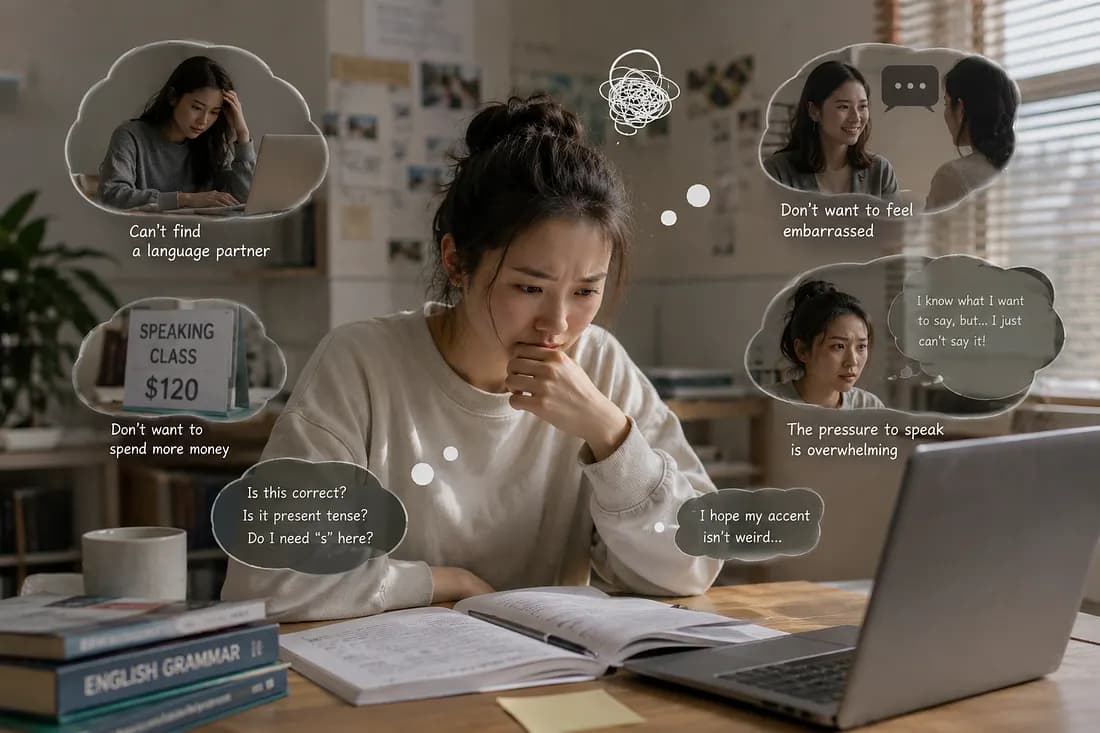 Knowing English and speaking English are two different things.
You might understand an English sentence immediately when you read it, but struggle to produce a response when someone speaks to you.
That's because speaking requires you to do several things at once:
- Understand the other person
- Think of a response
- Choose the right words
- Form a sentence
- Pronounce it clearly
- Keep the conversation going
The more you practice, the more naturally these steps begin to happen.
The problem is that many learners don't have enough opportunities to speak.
A teacher may only be available once or twice a week. Friends may not want to practice English every day. And finding a reliable language exchange partner can be difficult.
AI English speaking practice gives you another option: practice whenever you have time.
What Is AI Speaking Practice?
AI speaking practice uses artificial intelligence to simulate conversations and help you practice speaking a language.
Instead of simply memorizing vocabulary or repeating sentences, you interact with an AI conversation partner and respond to what it says.
The most useful AI speaking practice isn't just random chatting. It gives you a specific situation and a goal.
For example, you might practice:
- Meeting someone for the first time
- Ordering food
- Traveling
- Attending a job interview
- Talking to a colleague
- Making small talk
The AI can play the role of another person while you practice your responses.
A typical session looks like this:
Choose a scenario → Listen → Speak → Get feedback → Improve → Try again
This makes English conversation practice more interactive and closer to situations you may encounter in real life.
How AI Helps You Practice Real English Conversations
One of the biggest advantages of an AI speaking partner is that you don't have to practice completely on your own.
Imagine you're practicing how to meet someone for the first time.
The AI might say:
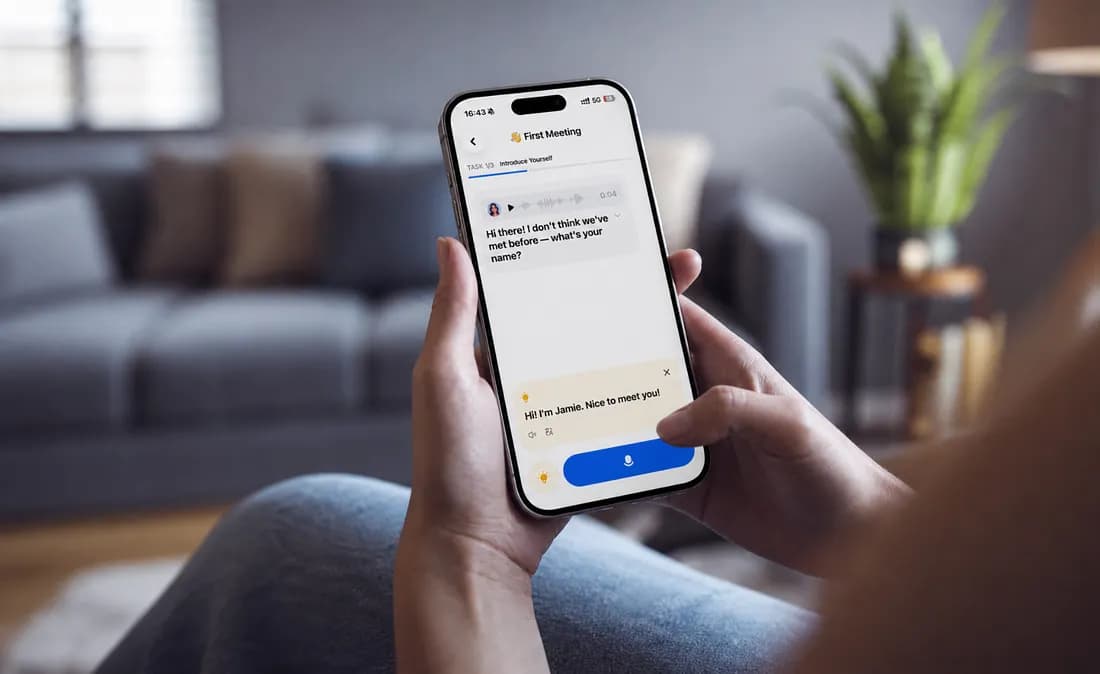
"Hi there! I don't think we've met before — what's your name?"
Instead of selecting an answer from a list, you need to actually respond.
You might say:
"Hi, my name is Isla."
The AI then continues the conversation based on the scenario.
This creates a simple learning cycle:
Listen → Think → Speak → Get feedback → Improve
You can repeat the process until responding in English feels more natural.
Practice With a Specific Goal
Scenario-based practice also gives you something specific to accomplish.
For example, a "Meeting Someone for the First Time" exercise could ask you to:
- Introduce yourself
- Ask about the other person
- Continue the conversation
- End the conversation politely
Instead of practicing random sentences, you're learning how to use English to accomplish a real communication goal.
That's what makes AI English conversation practice useful for everyday situations.
How to Practice English Speaking with Hi Translate
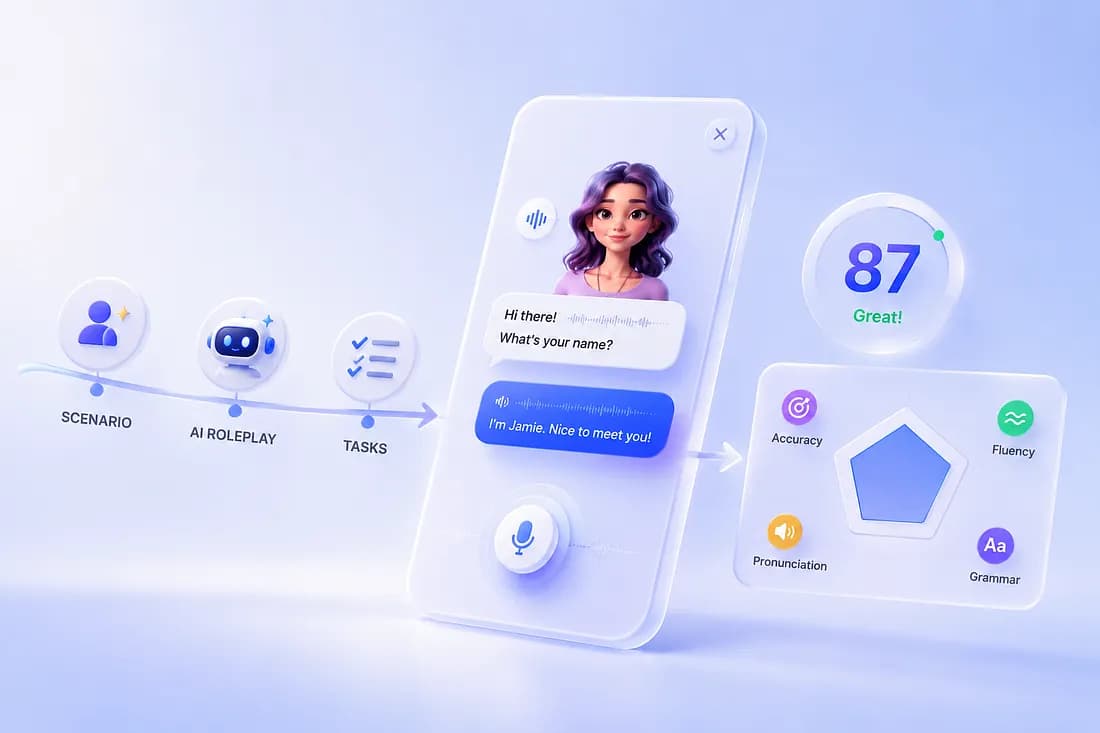
Hi Translate's AI Speaking Practice turns English conversation practice into structured, interactive scenarios.
Rather than simply opening a chatbot and asking it to talk to you, you can choose a scenario, interact with an AI character, complete speaking tasks, and receive feedback on your performance.
1. Choose a Real-Life Scenario
Start by choosing a situation you want to practice.
For example:
👋 Meeting Someone for the First Time
In this scenario, the AI plays the role of someone you're meeting for the first time.
Your goal is to introduce yourself, get to know the other person, and have a natural conversation.
This gives you context before you even start speaking.
2. Listen to Your AI Conversation Partner
The AI starts the conversation with a spoken sentence.
For example:
"Hi there! I don't think we've met before — what's your name?"
You can listen to the AI's voice while reading the English sentence on screen.
This means you're practicing listening and speaking together, rather than learning them separately.
3. Speak Your Own Answer
When it's your turn, simply tap the microphone and speak.
For example:
"Hi, my name is Isla."
You aren't choosing from multiple-choice answers.
You aren't just typing.
You actually have to speak.
This helps you practice producing English in real time—the same skill you need during an actual conversation.
4. Get AI Feedback
After you respond, Hi Translate can evaluate your performance.
You can receive an overall score as well as feedback on areas such as:
- Accuracy
- Fluency
- Pronunciation
- Grammar
For example, you may receive an overall speaking score together with individual scores for accuracy and fluency.
This gives you more information than simply knowing whether your answer was correct.
You can see what you're doing well and what you should improve.
5. Understand Your Mistakes
AI feedback can also point out specific problems in your English.
For example, you might receive a grammar suggestion explaining how to make a sentence grammatically correct.
You may also receive pronunciation feedback when your speech is understandable but could sound smoother or more natural.
The goal isn't simply to give you a score.
It's to help you understand how to improve your next response.
6. Practice, Improve, and Repeat
Speaking improvement doesn't happen after one conversation.
If you struggled with a scenario, you can practice again.
Try answering with a different expression. Pay attention to the feedback. Then speak again.
Over time, this turns a single conversation into a repeatable learning routine:
Speak → Get feedback → Correct → Repeat
The more consistently you practice, the more comfortable you can become with speaking English spontaneously.
Best Scenarios for AI English Speaking Practice
You don't have to wait for a real situation to practice English.
AI can help you simulate it beforehand.
✈️ Travel
Practice situations such as:
- Checking into a hotel
- Ordering at a restaurant
- Asking for directions
- Talking to airport staff
- Shopping
Practicing these conversations before traveling can make real interactions feel less stressful.
💼 Job Interviews
Practice introducing yourself, describing your experience, answering common interview questions, and responding to follow-up questions.
Repeated practice can help you become more comfortable answering in English without translating every sentence in your head.
🤝 Meeting New People
Practice introductions, small talk, asking questions, and ending conversations naturally.
These simple conversations are useful because they're common in everyday life.
🗣️ Daily Conversations
You can also practice talking about:
- Your hobbies
- Your work
- Your weekend
- Food
- Movies
- Music
- Travel
- Daily routines
You don't need a special reason to practice speaking English. Everyday topics are a great place to start.
3 Tips to Improve Your English Speaking Skills
1. Practice a Little Every Day
You don't need to spend an hour practicing.
Start with 10–15 minutes a day.
For example:
- 5 minutes: Complete a speaking scenario
- 5 minutes: Review your feedback
- 5 minutes: Repeat difficult sentences
Consistency matters more than one long practice session.
2. Don't Be Afraid of Making Mistakes
Making mistakes is part of learning to speak.
If you're constantly trying to create a perfect sentence before speaking, you may end up speaking less.
Use AI practice as a low-pressure environment.
Speak first. Learn from the feedback. Try again.
The goal is not perfect English from day one. The goal is to become more comfortable communicating.
3. Repeat Difficult Conversations
If a scenario was difficult, don't immediately move on.
Try it again.
The second attempt will often feel easier because you already understand the context.
Then challenge yourself to express the same idea in a different way.
This helps turn something you know into something you can actually say.
AI Speaking Practice vs. Traditional English Learning
AI doesn't have to replace teachers, classes, or real conversations.
Instead, it can fill one of the biggest gaps in language learning: regular speaking practice.
| Learning Method | Main Benefit | Limitation | |---|---|---| | Textbooks | Structured learning | Limited speaking | | Grammar exercises | Improves accuracy | Little real conversation | | English classes | Teacher guidance | Fixed schedule | | Private tutors | Personalized feedback | Higher cost | | Language exchange | Real human interaction | Finding a partner can be difficult | | AI speaking practice | Available anytime | Not a replacement for real people |
A balanced learning routine can combine these methods.
Use lessons to build your knowledge, AI to practice speaking regularly, and real conversations to apply what you've learned.
Frequently Asked Questions
Is AI good for practicing English speaking?
Yes. AI can provide a convenient way to practice English speaking regularly, especially if you don't have a consistent speaking partner.
Scenario-based AI practice can also make conversations more focused and relevant to real-life situations.
Can I practice English conversation with AI?
Yes. An AI conversation partner can simulate different situations and respond to what you say.
With scenario-based practice, you can work on specific communication skills rather than having completely random conversations.
How can I practice speaking English alone?
You can read aloud, shadow English videos, record yourself, or practice with an AI speaking partner.
AI has the advantage of giving you a response, so you can practice an actual back-and-forth conversation even when you're alone.
Is there a free AI speaking partner?
Some language-learning apps offer free AI speaking practice or limited free features, depending on the product and region.
Hi Translate's AI Speaking Practice lets you practice English conversations through interactive scenarios, speaking tasks, and AI-powered feedback.
Start Practicing English Speaking with AI
You don't need to wait until your English is perfect before you start speaking.
Choose a situation. Listen to your AI conversation partner. Speak your response. Get feedback. Then try again.
With regular practice, you can gradually become more comfortable responding in English and handling real conversations.
Whether you're preparing for a trip, getting ready for a job interview, studying abroad, or simply trying to become more confident in everyday English, AI speaking practice can give you another opportunity to speak whenever you need it.
Choose a scenario, start speaking, and build your English speaking skills with Hi Translate.

相关文章
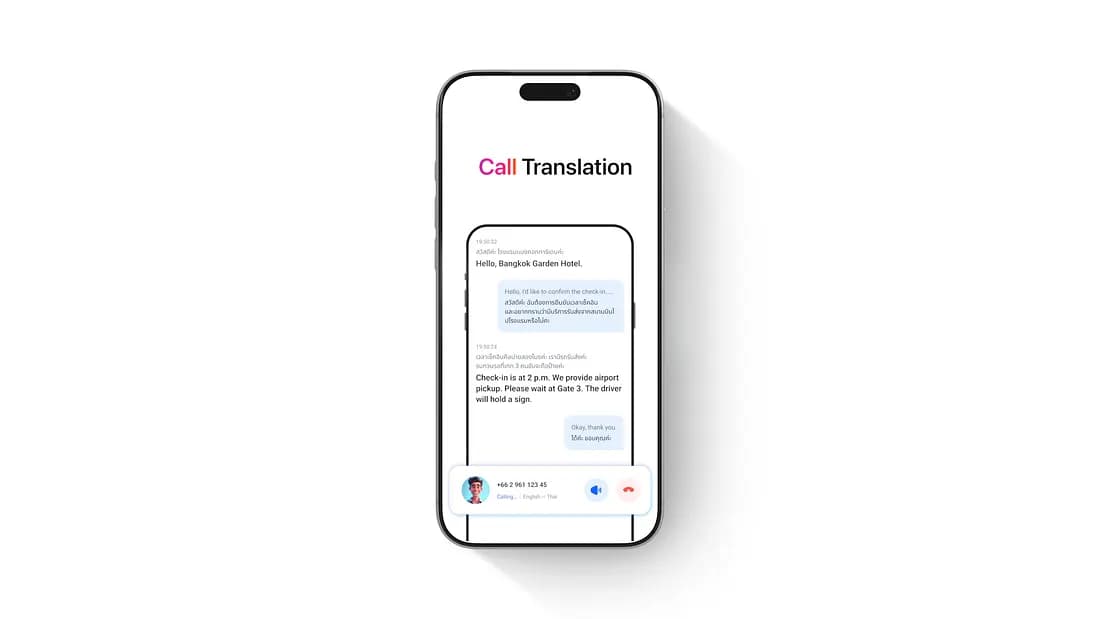
Hi Translate: Call Any Hotel Abroad in Your Own Language
You’ve booked a hotel in Bangkok. The day before departure, you want to call and confirm two things: what time check-in starts, and how to get from the airport to the hotel.
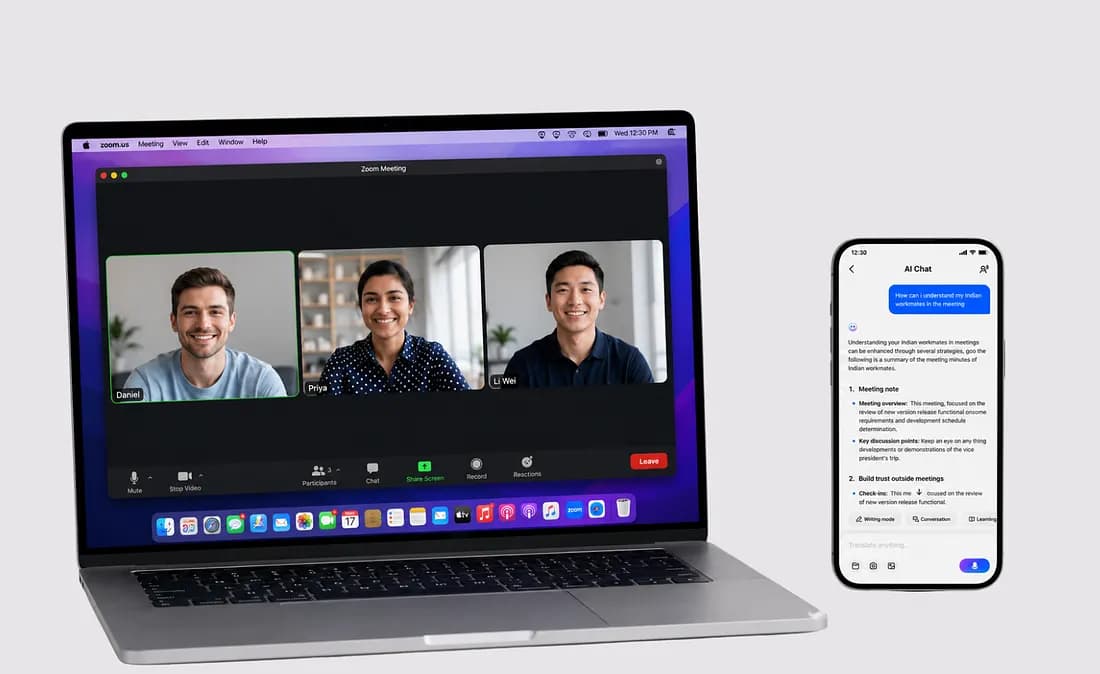
Real-Time Meeting Translation & AI Notes | Hi Translate
If you’ve ever walked out of a cross-language meeting thinking “I think I got the main points,” you already know the problem.
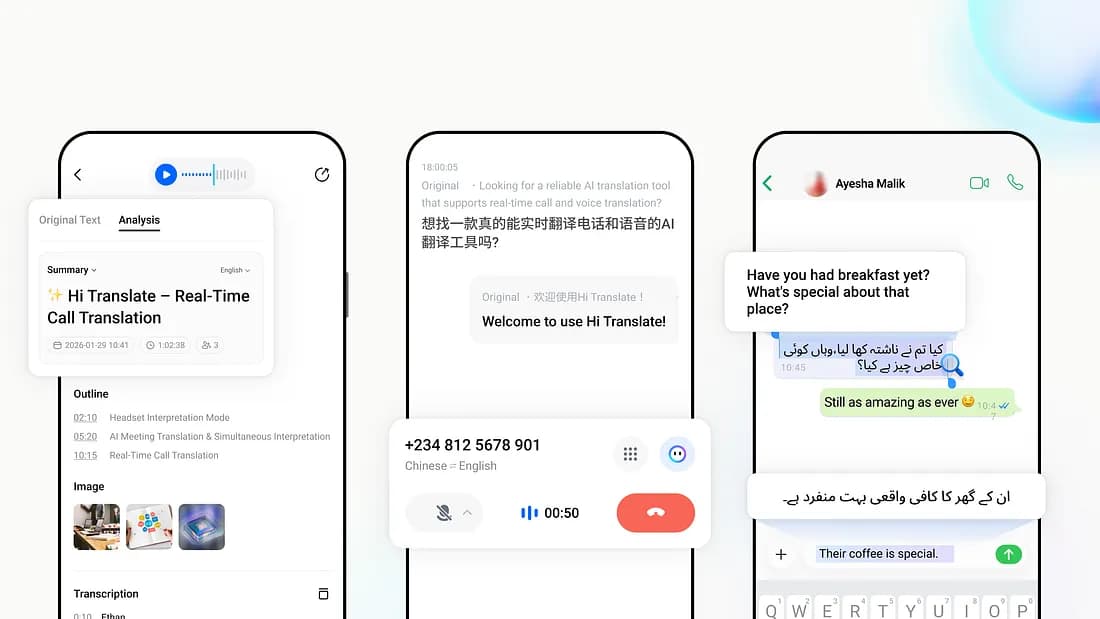
Hi Translate 6.0: A Multilingual AI Translation Agent
SHENZHEN, June 25, 2026 --- Hi Translate, the AI-powered multilingual communication platform developed by TRANSSION, today announced the launch of Hi Translate 6.0, marking a major evolution from a traditional translation tool to a Multilingual AI Agent.